
Digital Translation Practices in University English Learning: Adoption, Disciplinary Variation, and AI-Assisted Revision
- October 12, 2026
- 0
Contents
- 1
- 2 Introduction
- 3 Understanding Digital Translation Practices in Higher Education
- 4 Adoption of Digital Translation Tools Among University Students
- 5 Disciplinary Variation in Digital Translation Practices
- 6 The Growing Role of AI-Assisted Revision
- 7 Benefits of Digital Translation and AI-Assisted Revision
- 8 Challenges and Risks of Digital Translation Practices
- 9 Strategies for Integrating Digital Translation into University English Teaching
- 10 Future Directions for Research
- 11 Conclusion
Introduction
Digital technology has significantly transformed the way university students learn English, translate texts, and develop academic writing skills. Online dictionaries, machine translation platforms, translation applications, and artificial intelligence (AI) writing assistants have become increasingly common in higher education. These tools help students understand unfamiliar vocabulary, interpret complex sentences, and revise written assignments more efficiently.
Digital translation practices in university English learning involve more than converting words from one language into another. They include using digital resources to understand meaning, compare linguistic structures, improve grammar, and communicate ideas across languages. However, students’ adoption of these tools can vary depending on their academic disciplines, language proficiency, digital literacy, and educational goals. AI-assisted revision has also introduced new opportunities and challenges for both students and educators.
Understanding Digital Translation Practices in Higher Education
Digital translation practices refer to the use of electronic tools and online resources to support translation, language learning, and academic communication. University students may use these technologies when reading English-language research papers, preparing assignments, translating technical terminology, or revising essays.
Common digital translation resources include online dictionaries, machine translation services, bilingual terminology databases, grammar checkers, and AI-powered writing assistants. These tools can help students identify suitable vocabulary, understand sentence structures, and recognize differences between their native language and English.
For example, a student studying economics may use a translation application to understand a research article containing unfamiliar financial terminology. Another student studying literature may compare different translations of a poem to explore differences in tone, meaning, and cultural interpretation.
When used thoughtfully, digital translation tools can support independent learning and improve students’ confidence in academic English.
Adoption of Digital Translation Tools Among University Students
The adoption of digital translation tools depends on several interconnected factors. Accessibility, ease of use, perceived usefulness, and students’ previous experiences with technology all influence their willingness to incorporate these resources into their learning routines.
Accessibility and Convenience
Online translation tools are generally easy to access through computers, smartphones, and tablets. Students can translate unfamiliar words or entire passages without carrying printed dictionaries or waiting for assistance from instructors.
This convenience is particularly valuable for students who are learning English as an additional language. Digital resources can help them understand course materials, participate in classroom discussions, and complete academic tasks more independently.
Perceived Usefulness
Students are more likely to adopt translation tools when they believe the tools improve their understanding or save time. Immediate translations, grammar suggestions, and alternative word choices can make challenging academic texts easier to approach.
However, convenience does not always lead to effective learning. Students who rely entirely on automatic translation may fail to develop the vocabulary, grammar knowledge, and critical reading skills required for independent academic communication.
Digital Literacy and Language Proficiency
Digital literacy influences how effectively students evaluate translation results. Experienced users may compare multiple sources, examine contextual meaning, and identify inaccurate suggestions. Less experienced users may accept the first translation without checking whether it accurately represents the original text.
Similarly, students with stronger English proficiency may use digital tools mainly for refinement, whereas beginners may depend on them to understand entire passages. Universities should therefore teach students not only how to access digital resources but also how to evaluate and apply their results.
Disciplinary Variation in Digital Translation Practices
Digital translation practices are not identical across academic disciplines. Each field has its own terminology, communication conventions, and expectations for academic writing. Consequently, students’ reasons for using translation technologies can differ considerably.
Humanities and Literature
Students in literature, history, philosophy, and related disciplines often encounter texts that contain figurative language, cultural references, historical expressions, and complex arguments.
Digital translation can provide an initial understanding of difficult passages. Nevertheless, literary interpretation requires attention to tone, symbolism, ambiguity, and cultural context. Automatic translation may overlook these features or produce interpretations that are grammatically correct but conceptually misleading.
Students in the humanities can benefit from comparing translations, consulting original-language sources, and discussing interpretive differences with instructors.
Science and Engineering
Science and engineering students frequently work with technical documents, research articles, laboratory instructions, and specialized terminology. Translation tools can help them understand unfamiliar concepts and communicate scientific findings in English.
However, technical accuracy is essential. A mistranslated scientific term, measurement, or procedural instruction can create confusion and potentially compromise research quality.
Students should verify specialized vocabulary using authoritative textbooks, discipline-specific glossaries, and reliable research publications rather than relying exclusively on general-purpose translation systems.
Business and Social Sciences
Students in business, economics, sociology, and related disciplines may use digital translation to interpret reports, case studies, surveys, and international research.
These subjects often require precise explanations of concepts that vary across cultural and institutional contexts. For instance, translating business terminology literally may fail to capture its meaning in a particular legal or economic environment.
Students should examine the context in which a term appears and determine whether the translated expression communicates the intended concept accurately.
Health and Medical Education
Medical and health science students may use translation resources to understand research papers, professional guidelines, and technical vocabulary. Because these materials can influence clinical understanding and professional communication, accuracy is particularly important.
AI-generated translations should be checked against trusted medical references and reviewed by qualified professionals whenever the content has clinical significance.
The Growing Role of AI-Assisted Revision
Artificial intelligence has expanded the possibilities of digital translation by offering more context-sensitive writing assistance. Modern AI systems can help students revise sentences, improve grammar, reorganize paragraphs, identify unclear arguments, and suggest alternative expressions.
Unlike basic word-for-word translation, AI-assisted revision can consider the surrounding text and propose changes intended to improve readability and coherence.
Grammar and Vocabulary Improvement
AI writing assistants can identify grammatical errors, awkward expressions, punctuation problems, and inappropriate word choices. They may also suggest more natural academic phrasing.
For example, a student who writes a grammatically incorrect sentence can ask an AI tool to explain the error and provide a corrected version. When the student understands the explanation and applies the lesson independently, the tool can support language development.
Improving Academic Clarity
Academic writing requires logical organization, precise terminology, and clear explanations. AI-assisted revision can help students identify repetitive sentences, strengthen transitions, and improve paragraph structure.
However, students should ensure that revisions preserve their original meaning. An AI system may introduce claims, alter the author’s intended emphasis, or replace specialized terminology with expressions that are less accurate.
Supporting Multilingual Writers
Students who think and communicate primarily in another language may initially develop their ideas in that language before expressing them in English. Digital translation and AI-assisted revision can support this process by helping them move between languages and evaluate alternative expressions.
This approach can make academic participation more accessible, provided that students remain responsible for the ideas, interpretations, and final wording in their assignments.
Benefits of Digital Translation and AI-Assisted Revision
When integrated into effective teaching practices, digital translation technologies offer several educational benefits.
First, they improve access to English-language learning materials. Students can engage with texts that might otherwise be difficult to understand because of vocabulary or grammatical complexity.
Second, they encourage independent learning. Students can investigate unfamiliar expressions, compare translations, and revise their writing outside the classroom.
Third, these tools can reduce the time spent correcting routine language errors, allowing students to concentrate more on argument development, research, and subject knowledge.
Fourth, digital resources can support multilingual communication and increase students’ confidence when participating in international academic environments.
Finally, AI-assisted feedback can provide additional opportunities for revision between formal assessments, particularly when instructor feedback is limited.
These benefits depend on how the tools are used. Technology is most educationally valuable when it strengthens students’ understanding rather than replacing the learning process.
Challenges and Risks of Digital Translation Practices
Despite their advantages, digital translation tools present several challenges for universities and students.
Overdependence on Technology
Students who translate every sentence or generate complete assignments using AI may become less willing to develop their own language skills. Excessive reliance can weaken independent writing, vocabulary retention, and critical thinking.
Educators should encourage students to attempt challenging tasks independently before consulting digital tools.
Translation Errors and Hallucinations
Machine translation systems may misunderstand idioms, cultural references, technical terms, or ambiguous sentences. Generative AI systems may also produce unsupported explanations or incorrect information with considerable confidence.
Students should verify important claims and compare uncertain translations with reliable sources.
Academic Integrity
The boundaries between legitimate language assistance and inappropriate AI-generated work can be unclear. Universities should establish transparent policies explaining when translation, grammar correction, and generative AI assistance are permitted.
Students should acknowledge AI assistance when required by institutional rules and avoid presenting generated ideas or substantial rewritten material as entirely their own work.
Privacy and Data Protection
Uploading unpublished research, personal information, examination materials, or confidential institutional documents to online platforms may create privacy risks.
Universities should provide guidance on approved tools, data protection, and the responsible handling of sensitive information.
Strategies for Integrating Digital Translation into University English Teaching
Universities can improve learning outcomes by incorporating digital translation literacy into English courses and discipline-specific instruction.
Teach Critical Evaluation
Students should learn to compare machine-generated translations with original texts, identify errors, and explain why particular expressions are more appropriate in context.
Encourage Reflective Revision
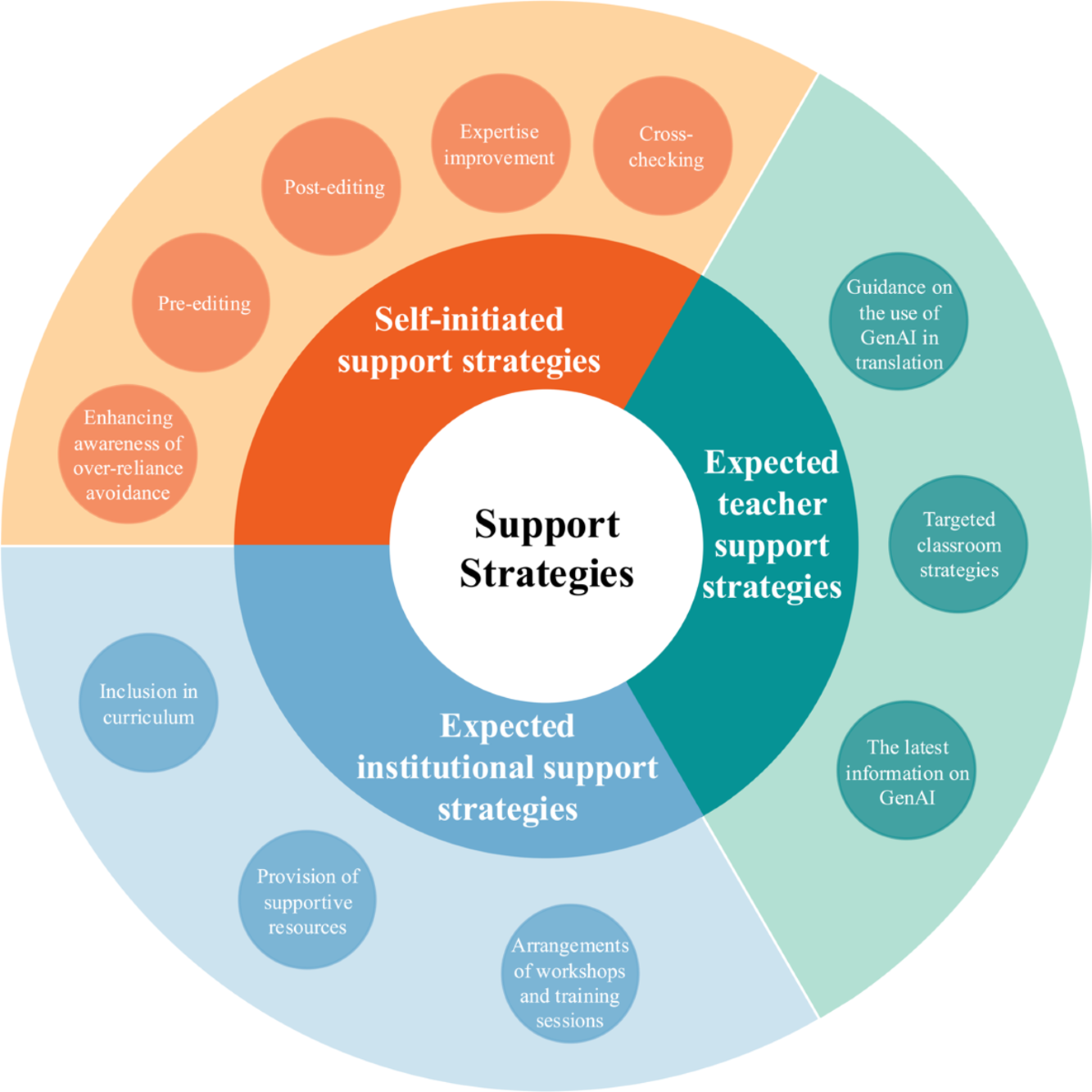
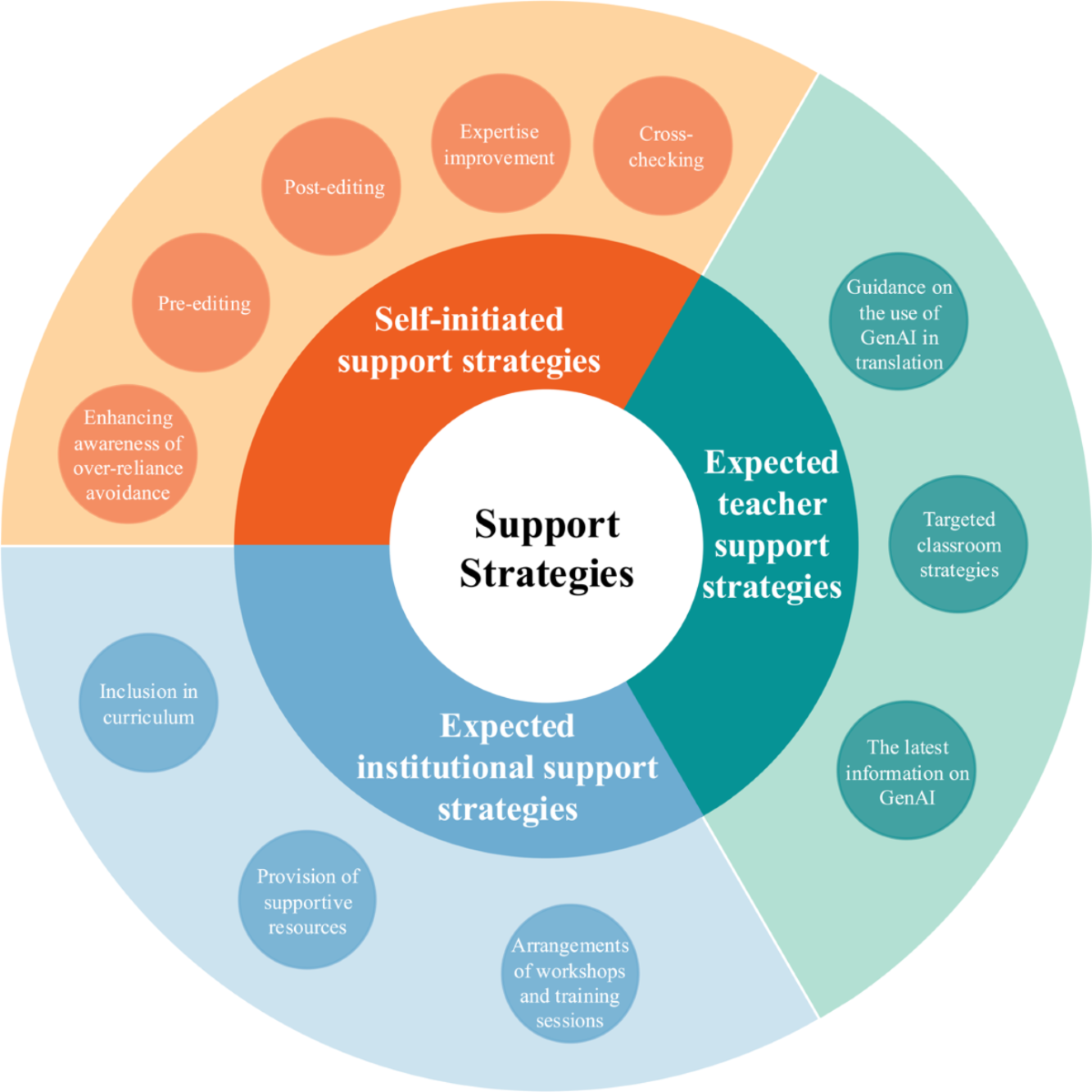
Rather than accepting AI corrections automatically, students can maintain revision notes describing the original problem, the suggested correction, and the reason for accepting or rejecting it.
This practice encourages grammatical awareness and independent decision-making.
Develop Discipline-Specific Guidelines
English instructors should collaborate with subject specialists to identify common terminology problems and establish appropriate translation practices for different academic fields.
Use Process-Based Assessment
Assignments can include outlines, early drafts, revision histories, and short reflections on technology use. These materials help instructors assess students’ development and understanding, not simply the quality of the final text.
Promote Responsible AI Use
Universities should explain the limitations of AI tools, clarify acceptable forms of assistance, and establish consistent expectations for attribution and independent work.
Future Directions for Research
Further research can investigate how students from different disciplines use digital translation tools, how their practices change as their English proficiency improves, and which forms of AI-assisted revision lead to measurable learning gains.
Researchers could compare students who use translation tools primarily for comprehension with those who use them for grammar correction or extensive rewriting. Interviews, surveys, classroom observations, and analyses of successive writing drafts could provide insight into students’ motivations and decision-making.
Longitudinal studies would be especially valuable for determining whether regular AI assistance improves independent writing over time or encourages excessive dependence.
Research should also consider differences in access to technology, students’ first languages, institutional policies, and the reliability of tools across academic contexts.
Conclusion
Digital translation practices have become an important part of university English learning, supporting comprehension, multilingual communication, and academic writing. Their adoption is shaped by accessibility, digital literacy, language proficiency, and disciplinary requirements. Humanities students may prioritize interpretation and cultural meaning, while science, engineering, business, and medical students may place greater emphasis on technical accuracy and specialized terminology.
AI-assisted revision offers additional opportunities to improve grammar, vocabulary, clarity, and organization. Nevertheless, concerns about overdependence, inaccurate translations, academic integrity, and privacy require careful attention.
The most effective approach is to treat digital translation and AI as learning aids rather than substitutes for human judgment. By teaching students to evaluate suggestions critically, verify information, preserve their own ideas, and follow responsible technology practices, universities can integrate these tools into English learning while strengthening independent language skills and academic confidence.