
What Is Azure Cognitive Services? A Complete Guide to Microsoft’s AI Services
- November 2, 2026
- 0

Artificial intelligence (AI) is transforming how businesses develop applications, analyse information, interact with customers, and automate everyday operations. From facial recognition and speech-to-text conversion to language translation and intelligent search, AI-powered technologies are becoming an important part of modern software development.
One of the platforms that helps developers integrate these capabilities into their applications is Microsoft Azure. Within its AI ecosystem, Azure Cognitive Services introduced a collection of cloud-based tools that allowed developers to use advanced artificial intelligence without building complex machine learning models from scratch.
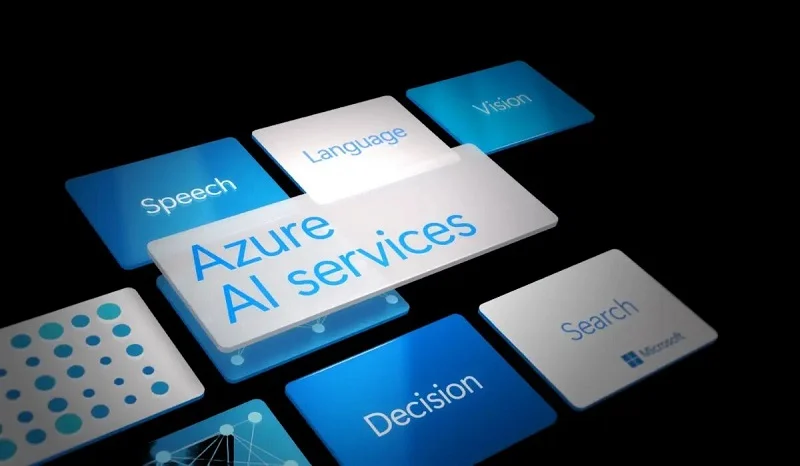
Today, many of these capabilities are available through Microsoft’s Azure AI Services branding. These services help organisations create intelligent applications that can understand text, recognise images, process speech, and make information more accessible.
In this article, we explore what Azure Cognitive Services is, how it works, its major features, practical applications, benefits, and limitations.
Contents
- 1 What Is Azure Cognitive Services?
- 2 How Does Azure Cognitive Services Work?
- 3 Major Categories of Azure Cognitive Services
- 4 Key Benefits of Azure Cognitive Services
- 5 Real-World Applications of Azure Cognitive Services
- 6 Azure Cognitive Services vs Traditional Machine Learning
- 7 Challenges and Limitations to Consider
- 8 How to Get Started with Azure AI Services
- 9 Conclusion
What Is Azure Cognitive Services?
Azure Cognitive Services was Microsoft’s collection of cloud-based artificial intelligence services designed to help developers add intelligent features to applications.
These services provided prebuilt AI models and APIs that could perform tasks such as:
-
Image and object recognition.
-
Speech recognition and speech generation.
-
Natural language processing.
-
Language translation.
-
Sentiment analysis.
-
Text extraction from documents.
-
Knowledge discovery and intelligent search.
The main advantage was that developers did not need extensive expertise in machine learning to implement these capabilities.
Instead of developing and training AI models independently, they could connect their applications to Microsoft’s cloud services through APIs and software development tools.
Microsoft has since evolved and reorganised this portfolio under its broader Azure AI branding. Therefore, developers exploring the platform today will generally encounter services such as Azure AI Vision, Azure AI Speech, Azure AI Language, and Azure AI Search.
How Does Azure Cognitive Services Work?
Azure Cognitive Services works by providing AI capabilities through cloud-hosted application programming interfaces (APIs).
An API allows two software applications to communicate and exchange information.
For example, imagine a company developing a mobile application that allows customers to upload photographs of products.
The application can send an image to an appropriate Azure AI service. The service processes the image using an AI model and returns information about recognised objects or visual characteristics.
The application can then display the results to the user.
A typical workflow involves the following steps:
-
A developer creates an application or software solution.
-
The application connects to an appropriate Azure AI service.
-
The user provides information, such as text, audio, or an image.
-
The service processes the submitted information using its AI capabilities.
-
The service returns the generated result through an API.
-
The application uses that result to perform the required task.
This cloud-based approach reduces the need to manage complex AI infrastructure independently.
Major Categories of Azure Cognitive Services
Azure Cognitive Services historically included several specialised service categories. These capabilities continue through Microsoft’s evolving Azure AI portfolio.
1. Azure AI Vision
Azure AI Vision provides computer vision capabilities that allow applications to analyse and interpret visual information.
It can help developers build applications that understand images and extract meaningful information from visual content.
Important capabilities include:
-
Image analysis.
-
Object detection.
-
Image description.
-
Optical Character Recognition (OCR).
-
Visual content identification.
For example, an e-commerce business can use computer vision to analyse product images and organise visual content automatically.
Similarly, document-processing applications can use OCR technology to extract printed text from scanned documents and photographs.
2. Azure AI Speech
Azure AI Speech enables applications to understand and generate spoken language.
It offers several capabilities that are useful for voice-enabled applications and communication platforms.
These include:
Speech-to-text: Converts spoken words into written text.
Text-to-speech: Converts written content into natural-sounding speech.
Speech translation: Translates spoken language into another language.
Speech recognition: Helps applications understand voice commands and spoken information.
For example, a business can integrate speech recognition into its customer support platform to enable voice-based interactions.
Educational applications can also use text-to-speech technology to make digital learning materials more accessible.
3. Azure AI Language
Azure AI Language provides natural language processing capabilities that help applications understand written text.
Natural language processing (NLP) is a branch of artificial intelligence focused on enabling computers to interpret and work with human language.
Its capabilities include:
-
Sentiment analysis.
-
Key phrase extraction.
-
Language detection.
-
Named entity recognition.
-
Text summarisation.
-
Question answering.
For example, a company can analyse thousands of customer reviews to identify common complaints, positive feedback, and recurring product-related concerns.
This helps organisations understand customer opinions without manually reading every review.
4. Azure AI Translator
Azure AI Translator is a cloud-based machine translation service that helps applications translate text between supported languages.
It is useful for businesses that communicate with customers across different countries and linguistic regions.
For example, an international e-commerce platform can use translation services to make product descriptions and customer support information available in multiple languages.
Developers can integrate translation capabilities into websites, mobile applications, and enterprise software.
5. Azure AI Document Intelligence
Azure AI Document Intelligence helps organisations extract information from different types of documents.
It can process forms, invoices, receipts, identity documents, and other structured or semi-structured files.
The technology uses document processing and machine learning capabilities to identify relevant information and convert it into structured data.
For example, an accounting department can use document processing to extract invoice numbers, dates, supplier details, and payment amounts.
This reduces repetitive manual data entry and can improve administrative efficiency.
6. Azure AI Search
Azure AI Search helps organisations build intelligent search experiences across large collections of information.
It supports traditional search capabilities alongside advanced features such as vector search and hybrid search.
Businesses can use it to create search applications that retrieve relevant information from websites, internal documents, product catalogues, and enterprise databases.
When combined with suitable AI models, it can also support retrieval-augmented generation (RAG), allowing generative AI applications to retrieve relevant organisational information before producing responses.
Key Benefits of Azure Cognitive Services
Azure’s AI services offer several advantages for organisations developing intelligent applications.
1. Easy AI Integration
Developers can integrate prebuilt AI capabilities into applications using APIs and supported development tools.
This reduces the need to develop machine learning models independently.
2. Reduced Development Time
Building AI models from scratch can require significant time, computing resources, and specialist knowledge.
Prebuilt services help organisations introduce AI-powered features more quickly.
3. Scalability
Azure provides cloud infrastructure that supports applications with changing workloads.
Businesses can choose suitable service configurations according to their technical requirements and usage patterns.
4. Multiple Language Capabilities
Azure AI services support various languages, making them useful for international businesses and applications serving multilingual audiences.
5. Integration with the Microsoft Ecosystem
Azure AI services can work with other Microsoft technologies, including Azure cloud infrastructure, Microsoft application development tools, and enterprise data platforms.
This integration can simplify the development of connected business solutions.
6. Flexible Development Options
Developers can use REST APIs, SDKs, and supported programming languages to connect Azure AI capabilities with different applications.
This flexibility makes the services suitable for websites, mobile applications, enterprise software, and cloud-based platforms.
Real-World Applications of Azure Cognitive Services
Azure AI services can support different industries and business operations.
Healthcare: Organisations can use document processing and language technologies to support administrative documentation and information management, subject to appropriate clinical validation and privacy safeguards.
Education: Educational platforms can integrate speech recognition, text-to-speech, and translation features to improve learning accessibility.
Retail and e-commerce: Computer vision and language processing can support product categorisation, customer feedback analysis, and intelligent search.
Banking and finance: Document processing can help extract information from financial documents, invoices, and application forms.
Customer service: Speech recognition, sentiment analysis, and language processing can support customer interaction platforms.
Manufacturing: Computer vision can help analyse visual information for selected quality inspection and monitoring applications.
Azure Cognitive Services vs Traditional Machine Learning
Although both technologies involve artificial intelligence, they serve different development requirements.
| Feature | Azure AI Services | Traditional Machine Learning |
|---|---|---|
| Model development | Uses prebuilt AI models | Often requires custom model development |
| Technical expertise | Relatively lower requirement | Usually requires specialist knowledge |
| Implementation | API-based integration | Requires training and deployment workflows |
| Customisation | Depends on available service capabilities | Greater control over model design |
| Development time | Generally shorter | Can be considerably longer |
| Maintenance | Microsoft manages underlying service infrastructure | Organisation manages much of the model lifecycle |
For businesses that need common AI capabilities quickly, prebuilt services can be a practical option. However, organisations with highly specialised requirements may benefit from developing custom machine learning solutions.
Challenges and Limitations to Consider
Despite its advantages, Azure AI Services is not suitable for every situation.
Organisations should consider several important factors before implementation.
-
Usage costs: API calls, data processing, and selected service configurations can generate ongoing expenses.
-
Data privacy: Sensitive information must be handled according to applicable privacy regulations and organisational policies.
-
Accuracy limitations: AI models can produce incorrect classifications, translations, or extracted information.
-
Integration complexity: Connecting AI services with older business systems may require additional development work.
-
Vendor dependency: Relying heavily on a single cloud provider can create migration and infrastructure challenges.
-
Human oversight: High-impact decisions should not depend entirely on automated AI outputs.
Businesses should evaluate performance, security, cost, and compliance requirements before deploying AI services in production environments.
How to Get Started with Azure AI Services
Developers and organisations interested in using Azure AI services can begin by exploring Microsoft’s Azure platform.
A typical starting process includes:
-
Create or access a Microsoft Azure account.
-
Explore the available Azure AI services.
-
Select a service based on the application’s requirements.
-
Create the required Azure resource.
-
Configure authentication and access permissions.
-
Integrate the service using an API or supported SDK.
-
Test the application with representative data.
-
Monitor performance, usage, security, and costs.
Microsoft provides documentation, tutorials, sample projects, and developer resources to help users understand individual services.
Official resource: Microsoft Azure AI Services Documentation.
Conclusion
Azure Cognitive Services played an important role in making artificial intelligence more accessible to developers and businesses. By offering prebuilt capabilities for computer vision, speech recognition, language processing, translation, and document analysis, it reduced the complexity of integrating AI into modern applications.
Although Microsoft has evolved this portfolio under its broader Azure AI branding, the underlying objective remains similar: helping organisations use intelligent technologies without building every AI capability from scratch.
From customer service automation and document processing to multilingual applications and intelligent search, Azure AI services provide practical opportunities for digital transformation.
For businesses planning to adopt artificial intelligence, understanding these services is an important first step towards building smarter, more efficient, and more responsive applications.