
Studying Abroad vs International Branch Campuses in India: A Comprehensive ROI Comparison
- June 29, 2026
- 0
In recent years, Indian students have had more options than ever when it comes to pursuing a world-class education. Traditionally, studying abroad in countries such as the United States, the United Kingdom, Canada, Australia, and Germany has been the preferred choice for students seeking international exposure and globally recognized degrees. However, the emergence of international branch campuses in India is changing the higher education landscape.
As renowned foreign universities establish campuses in India, students now face an important question: Should they study abroad or enroll in an international branch campus within India? The answer often comes down to one crucial factor—Return on Investment (ROI).
This article explores the costs, benefits, career opportunities, and long-term value associated with both options.
Contents
- 1 Understanding ROI in Higher Education
- 2 The Cost of Studying Abroad
- 3 The Rise of International Branch Campuses in India
- 4 Comparing Academic Quality
- 5 Career Opportunities and Employability
- 6 Financial ROI: Which Option Offers Better Value?
- 7 International Exposure: A Key Consideration
- 8 Long-Term Career Impact
- 9 Who Should Choose Studying Abroad?
- 10 Who Should Choose an International Branch Campus in India?
- 11 Conclusion
Understanding ROI in Higher Education
Return on Investment (ROI) in education refers to the value students receive from their academic investment. It considers factors such as:
- Tuition fees
- Living expenses
- Employment opportunities
- Salary potential
- Networking benefits
- Career growth
- Long-term earning prospects
A higher ROI means that the financial and personal benefits gained from education outweigh the costs incurred.
The Cost of Studying Abroad
One of the biggest challenges associated with overseas education is the significant financial investment required.
Tuition Fees
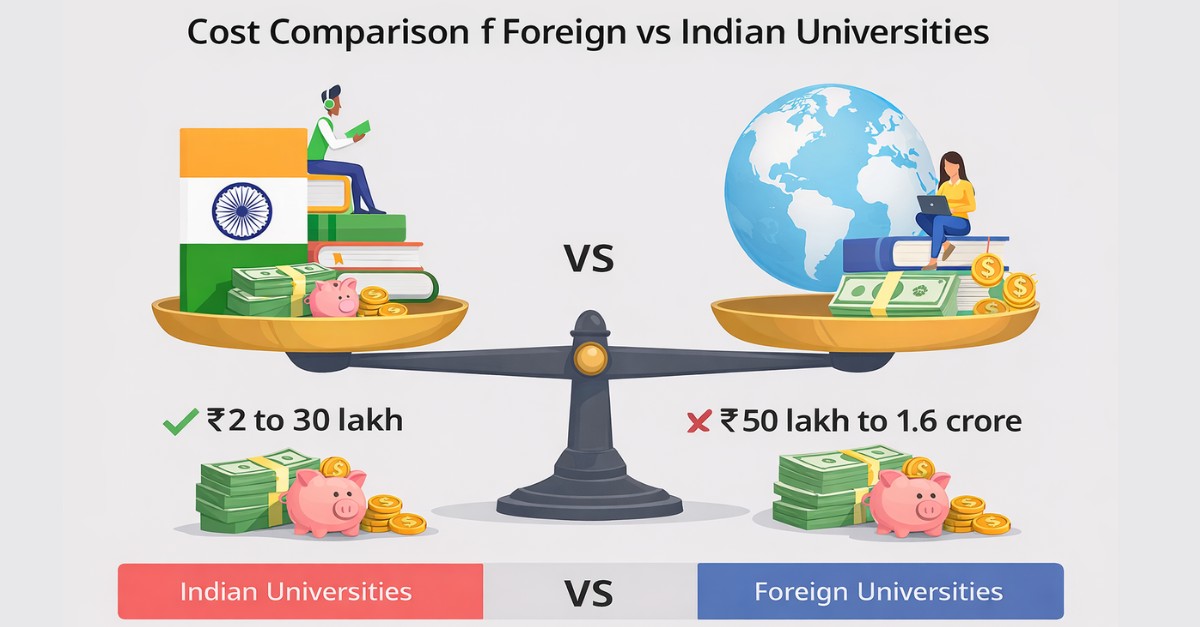
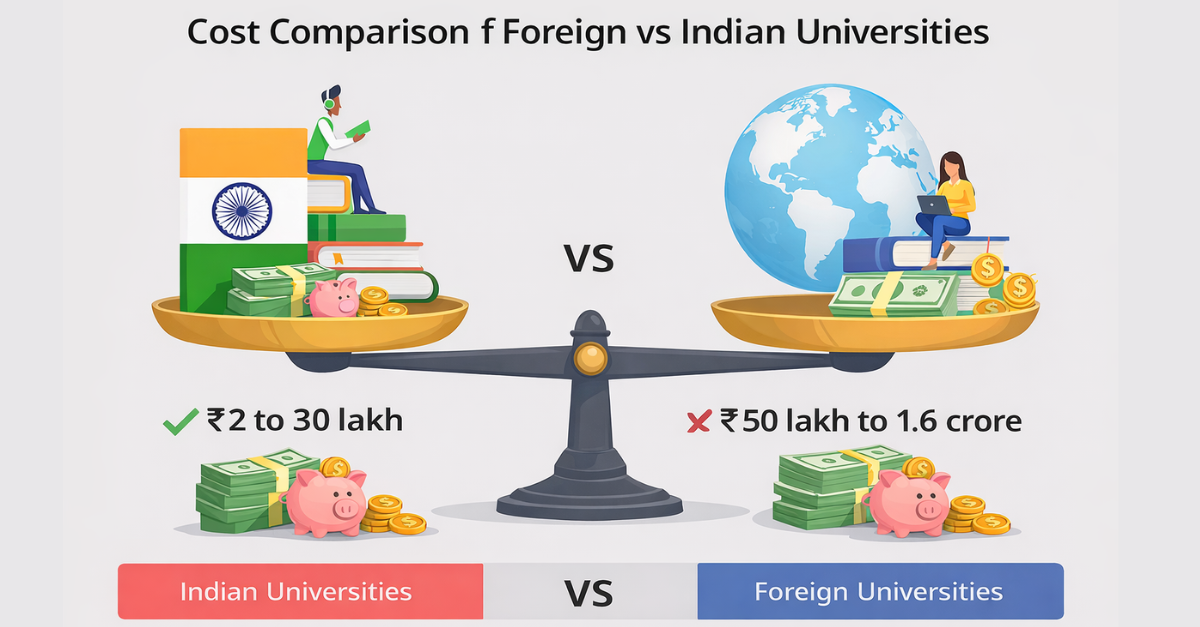
Tuition fees vary depending on the country and university, but many international programs can cost between ₹15 lakh and ₹50 lakh per year. Professional programs such as medicine, engineering, business administration, and law may cost even more.
Living Expenses
Apart from tuition, students must budget for:
- Accommodation
- Food
- Transportation
- Healthcare
- Insurance
- Utility bills
Living costs in countries like the US, UK, and Australia can add another ₹10 lakh to ₹20 lakh annually.
Travel Costs
International students often incur additional expenses such as:
- Airfare
- Visa fees
- Immigration processing
- Currency exchange fluctuations
These costs further increase the overall financial burden.
The Rise of International Branch Campuses in India
International branch campuses are institutions established by foreign universities within India. These campuses offer programs based on the same curriculum and academic standards as their parent institutions abroad.
Students receive globally recognized degrees while studying closer to home.
Lower Educational Costs
One of the primary advantages is affordability.
Since students remain in India, they avoid expenses associated with:
- International travel
- Overseas accommodation
- Foreign healthcare systems
- Visa renewals
As a result, the overall cost can be substantially lower than studying abroad.
Familiar Environment
Students can benefit from:
- Proximity to family
- Cultural familiarity
- Reduced adjustment challenges
- Lower stress levels
This can positively impact academic performance and overall well-being.
Comparing Academic Quality
Studying Abroad
Studying at the main campus of a foreign university often provides access to:
- Extensive research facilities
- Established faculty networks
- Cutting-edge laboratories
- Global student communities
Many prestigious institutions have decades or even centuries of academic excellence behind them.
International Branch Campuses
Branch campuses are increasingly maintaining academic standards similar to those of their parent institutions. Students may receive:
- Identical curricula
- International teaching methodologies
- Global certifications
- Access to international faculty
However, some branch campuses may still be developing infrastructure and research capabilities compared to their main campuses.
Career Opportunities and Employability
Advantages of Studying Abroad
Studying overseas often provides direct access to international job markets.
Benefits include:
- Internship opportunities with global companies
- Exposure to multinational work environments
- International networking opportunities
- Potential pathways to work visas and residency
Graduates can often command higher salaries, especially if they secure employment in developed economies.
Advantages of International Branch Campuses
Students studying at international campuses in India can still gain access to:
- Global curriculum
- International collaborations
- Industry partnerships
- Placement support
Additionally, graduates who plan to work in India may find strong employment prospects without incurring large educational debts.
Financial ROI: Which Option Offers Better Value?
Studying Abroad ROI
The ROI of studying abroad depends heavily on post-graduation outcomes.
A student who secures a high-paying job overseas may recover educational expenses relatively quickly. However, several risks exist:
- Job market fluctuations
- Visa restrictions
- Economic downturns
- High student loan burdens
For some graduates, loan repayment may take many years.
International Branch Campus ROI
Because educational costs are generally lower, students often achieve positive ROI faster.
Advantages include:
- Reduced debt burden
- Lower financial risk
- Earlier financial independence
- Greater flexibility in career choices
Students can potentially start saving and investing sooner after graduation.
International Exposure: A Key Consideration
Studying Abroad
Living in another country offers valuable life experiences such as:
- Cultural immersion
- Global networking
- Language development
- Enhanced adaptability
These experiences can significantly contribute to personal and professional growth.
International Branch Campuses
While branch campuses offer international education, the level of cultural immersion may be more limited.
However, many institutions compensate through:
- Student exchange programs
- International faculty
- Collaborative projects
- Overseas semester opportunities
Students can still gain substantial global exposure without relocating permanently.
Long-Term Career Impact
The prestige associated with studying at a university’s main international campus may still carry additional weight in some industries and regions.
However, employers are increasingly focusing on:
- Skills
- Experience
- Academic performance
- Industry certifications
As branch campuses mature and establish strong reputations, the gap between the two options may continue to narrow.
Who Should Choose Studying Abroad?
Studying abroad may be the better option for students who:
- Seek full international immersion
- Plan to build careers overseas
- Have sufficient financial resources
- Desire access to advanced research facilities
- Want extensive global networking opportunities
For these students, the long-term benefits can justify the higher costs.
Who Should Choose an International Branch Campus in India?
An international branch campus may be ideal for students who:
- Want a globally recognized degree at a lower cost
- Prefer staying closer to family
- Wish to avoid large student loans
- Plan to work primarily in India
- Seek strong ROI with reduced financial risk
These campuses provide a practical balance between quality education and affordability.
Conclusion
The choice between studying abroad and attending an international branch campus in India ultimately depends on a student’s career goals, financial situation, and personal preferences. Studying abroad offers unmatched international exposure and access to global job markets, but it comes with substantial financial commitments. On the other hand, international branch campuses provide a cost-effective pathway to global education while significantly reducing expenses.
From a pure ROI perspective, international branch campuses in India often deliver stronger short-term financial returns due to lower costs and reduced debt. However, for students aiming for international careers and broader global experiences, studying abroad may still provide greater long-term rewards.
Carefully evaluating both options can help students make an informed decision that aligns with their educational ambitions and financial future.