Move from Legacy to Modern in Months with the AI Modernization Toolkit
- February 20, 2026
- 0

Across industries, many organizations still depend on systems built decades ago. They may still function, but maintaining them — let alone integrating them with cloud-native solutions — grows more complex and costly each year. Traditional migration projects often drag on for years, draining budgets and introducing risk.
There’s a smarter path forward.
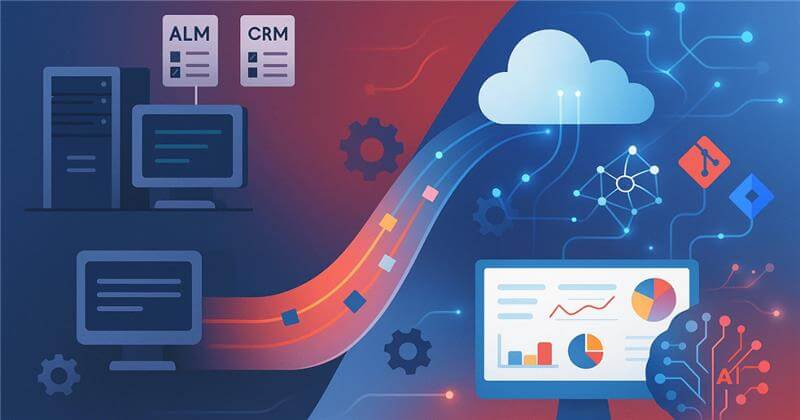
AI-powered modernization is transforming how companies upgrade legacy systems. Instead of manually rewriting code line by line, specialized AI can analyze existing applications, translate them into modern technologies, generate tests and deliver production-ready results — dramatically accelerating digital transformation.
Software Mind’s AI Modernization Toolkit was built to do exactly that.
Let’s explore how it works, what problems it solves and where it delivers the greatest impact.
Contents
What Is the AI Modernization Toolkit?
The AI Modernization Toolkit is a customizable ecosystem of multi-agent AI solutions designed to accelerate modernization initiatives, optimize delivery and reduce development overhead.
Implemented and supervised by Software Mind’s engineering specialists, the toolkit adapts to each organization’s technical landscape. It integrates across backend, frontend and testing layers — cutting the time required to upgrade systems from years to months.
Rather than relying on a single general-purpose AI model, the toolkit uses a coordinated network of specialized agents. Each one focuses on a distinct task and validates the others’ output, creating a self-improving modernization process with built-in quality control.
Core Capabilities
1. AI-Assisted Code Migration
Migrating legacy systems — whether written in COBOL, JCL, CICS, Oracle Forms, PowerBuilder, Delphi or Visual Basic — traditionally requires extensive manual effort. The toolkit automates much of this complexity.
It can:
-
Analyze legacy applications and dependencies
-
Translate business logic into modern stacks such as Java + Spring Boot or .NET
-
Generate modern architectural patterns
-
Create tests automatically
-
Propose updated UI components
Each AI agent has a defined responsibility: one examines data structures, another processes control flow, while others handle code translation and validation. Their outputs are cross-verified in iterative cycles, increasing precision and consistency.
Software Mind experts remain actively involved throughout, refining results and ensuring alignment with business goals.
The outcome: secure, clean, production-ready code built for cloud-native environments.
2. Automated Test Generation
Testing is often one of the most time-consuming elements of modernization. The AI Modernization Toolkit streamlines this by automatically generating:
-
Unit tests
-
Integration tests
-
End-to-end (E2E) tests
When new code is introduced, AI agents analyze the logic, determine required coverage and generate appropriate test scenarios. For unit and integration tests, the toolkit identifies which classes and branches require validation to meet coverage targets.
For E2E testing, the process is even simpler. Teams describe a business scenario in natural language, and the toolkit generates automated tests using frameworks such as Playwright, Cypress or Selenium.
Generated tests integrate directly into the project and can be regenerated on demand or automated through CI/CD pipelines.
3. UI-to-Code Conversion
Modernization isn’t just backend deep — it’s visual too.
The toolkit can transform a screenshot of a user interface — from a website, Figma design or even a terminal screen — into clean, maintainable React or Angular code.
AI agents analyze layouts, detect components and styles, and generate structured frontend code that aligns with modern frameworks. A live sandbox preview allows developers to test and refine the output immediately.
Teams can implement industry-standard component libraries like Material UI, Ant or Bootstrap — or integrate proprietary design systems.
This dramatically reduces the time required to modernize outdated interfaces.
Key Challenges It Solves
Traditional modernization projects often suffer from:
-
Underestimated timelines
-
Escalating costs
-
High risk of human error
-
Massive developer workload
The AI Modernization Toolkit addresses these pain points by:
-
Reducing migration time and associated costs
-
Minimizing errors through multi-agent validation
-
Automating repetitive tasks so teams can focus on innovation
It also accelerates broader modernization initiatives — from frontend upgrades to enhanced test automation — while reducing technical debt and integration bottlenecks.
Business Benefits of AI-Driven Modernization
The toolkit was designed for flexibility and measurable business value.
Customization
It adapts to unique systems and integrates not only with standard frameworks but also proprietary technologies.
Security & Compliance
It operates within a controlled environment with full auditability and ISO-aligned processes.
Seamless Deployment
It integrates into existing environments without disrupting operations and syncs with widely used frameworks.
Organizations implementing the toolkit gain:
-
Reduced workload through automation
-
Significant time and cost savings
-
Improved scalability via modern architecture
-
Faster cloud adoption
-
Enhanced security and validated code quality
How the Toolkit Was Built
The AI Modernization Toolkit was shaped by years of experience working with both mainframe environments and modern cloud architectures.
Rather than relying on a single neural network to handle complex transformations, Software Mind engineered a collaborative ecosystem of AI agents. Each agent has a clearly defined role and continuously reviews others’ output in iterative refinement cycles.
This layered approach ensures higher accuracy, adaptability and long-term scalability.
Where It Makes the Biggest Impact
The AI Modernization Toolkit supports organizations across industries in:
-
Migrating legacy languages (e.g., COBOL to Java)
-
Modernizing outdated technology stacks
-
Rebuilding legacy UIs in React or Angular
-
Generating APIs to improve integration readiness
-
Accelerating full-scale cloud transformations
Accelerate Your Digital Transformation
Modernization doesn’t need to be slow, risky or overwhelming.
With a structured multi-agent AI framework and expert oversight, Software Mind’s AI Modernization Toolkit enables companies to move from legacy systems to modern, cloud-ready solutions faster — and with confidence.
The result is more flexible architecture, improved scalability and greater capacity for innovation.
Digital transformation isn’t just about updating code. It’s about unlocking new opportunities — and doing it in months, not years.