
Zimbabwe: Creating Better Conditions So Rural Teachers Can Stay — and Thrive
- February 27, 2026
- 0
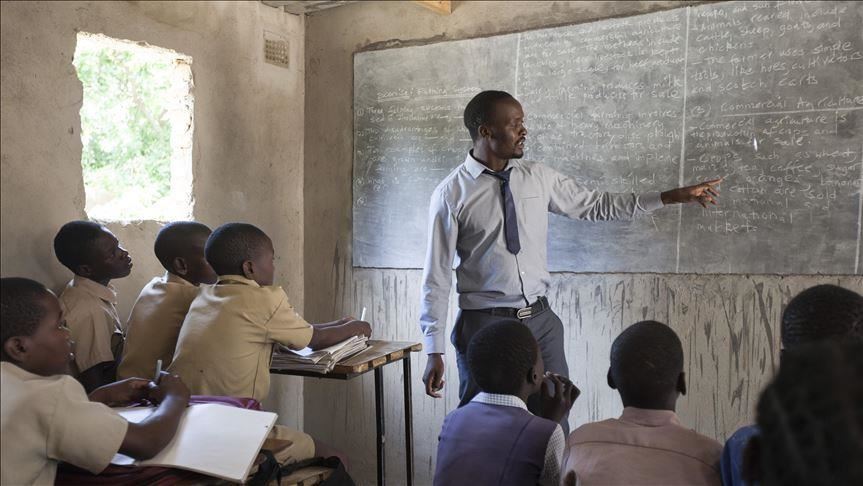
It’s Friday afternoon at Domborinenhiwi Primary School in rural Mashonaland East. Classes end at midday. In the past, that would have meant a frantic search for transport home.
Not anymore.
Today, Miriam Kaseke lingers on the school grounds, walking toward a neat grey house recently built beside the classrooms. This is where she now lives — comfortably — and this weekend, her family will visit.
“They’re happy to come here now,” she says, smiling. “It finally feels like home.”
That sense of stability is new. And it’s part of a broader effort to improve conditions for teachers in Zimbabwe’s most vulnerable rural schools.
The transformation is supported through Zimbabwe’s School Improvement Grant program, led by the Ministry of Primary and Secondary Education, funded by GPE, and technically supported and managed by UNICEF. The initiative focuses on fragile rural and farming communities, upgrading essential infrastructure to improve both teaching conditions and student learning.
Contents
Teaching in Survival Mode
When Kaseke arrived at Domborinenhiwi in 2019, her reality looked very different.
A crumbling four-room teachers’ house stood overcrowded. With no space available, she was forced to live in what had once been a pantry.
“It was meant to be an indoor toilet space,” she recalls. “That tiny room became my kitchen, bedroom, and living area. I could barely turn while sleeping. If I rolled over, my head would land in a dish of water and my feet on the plates.”
Privacy was nonexistent. Doors wouldn’t lock properly. Windows hung loosely in their frames. The leaking roof allowed reptiles inside. She still laughs nervously remembering a colleague who fled his room after finding a snake under his blankets.
“Sleep was never restful. I didn’t feel safe,” she says. “But I couldn’t transfer. I was still on probation.”
The classrooms were in equally poor condition. One block was built from mud. Another had lost its roof to strong winds. With missing doors and windows, livestock wandered in freely, trampling books and materials.
Teaching under those circumstances was exhausting.
“I felt drained every morning,” Kaseke says.
Teacher turnover became common. Absenteeism increased. The school relied heavily on untrained community volunteers — often recent school leavers — to keep classes running, explains acting school head Melody Mupfudze.
This local struggle reflects a wider regional challenge. A 2020 UNICEF study found teacher absenteeism in Eastern and Southern Africa ranges between 15% and 45%, significantly contributing to the learning crisis. In many low- and middle-income rural areas, more than half of children complete primary school without basic reading comprehension.
Poor working conditions are a major driver of teacher absence.
From Struggle to Stability
Today, Domborinenhiwi Primary looks markedly different.
The school has repaired and upgraded classrooms, purchased desks, and constructed a bright new classroom block for infant learners.
“That block is our pride,” Mupfudze says, pointing to a freshly painted yellow building. “From foundation to roofing, we built it using the grant funds. We had enough resources to do it properly.”
Improved infrastructure has begun to stabilize staffing. While challenges remain, Mupfudze believes teachers are now more likely to stay.
“When conditions improve, commitment improves,” she says.
For Kaseke, the changes shifted her perspective entirely.
“I realized I could be part of something bigger,” she explains. “Instead of just surviving here, I could help build a school other communities might look to for inspiration.”
Through the process, she has gained hands-on experience in construction oversight, school management, and community coordination — skills she never expected to develop as a classroom teacher.
Community at the Center
The transformation has not been driven by funding alone.
Zimbabwe’s “whole school” approach — promoted by the Ministry of Primary and Secondary Education and UNICEF — emphasizes community participation. Parents, caregivers, traditional leaders, political representatives, and students all contribute to shaping the school’s future.
“The grant funds gave us momentum,” Kaseke says. “But the community made it possible.”
On a recent afternoon, local men transported sand in wheelbarrows for construction. School Development Committee chairperson Knowledge Meki urged volunteers to work quickly before the rainy season.
“We cannot leave this last block unfinished,” he said.
Local councilor Christopher Machipisa also joined the effort. He understands the broader social pressures facing children in the area, where artisanal gold mining attracts young boys — and often girls — with promises of quick money.
“At home, children see miners earning fast cash,” he explains. “Girls sometimes marry into that life. But those gains are temporary. Education creates lasting success.”
He pauses, then adds: “That’s why keeping teachers here matters so much.”
A Reason to Stay
Back at her new home on the school grounds, Kaseke reflects on the journey.
The difference is not just about better housing or stronger walls. It’s about dignity, safety, and belonging. It’s about teachers feeling valued enough to remain in communities that need them most.
Standing alongside her colleagues, she smiles.
“We’re not going anywhere,” she says with a laugh. “As long as this commitment continues.”
In rural Zimbabwe, improving teacher living and working conditions is proving to be more than an infrastructure project. It’s an investment in stability, in community trust, and in children’s futures.
Because when teachers stay — students thrive.