Reflections from the UKFIET 2025 conference on collective learning to prevent violence in education
- January 29, 2026
- 0
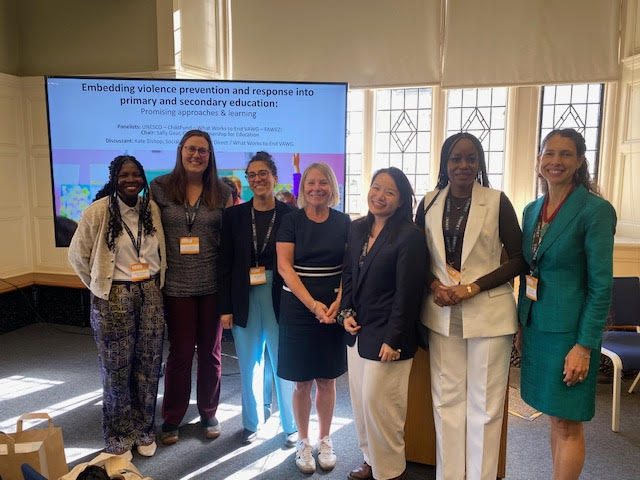
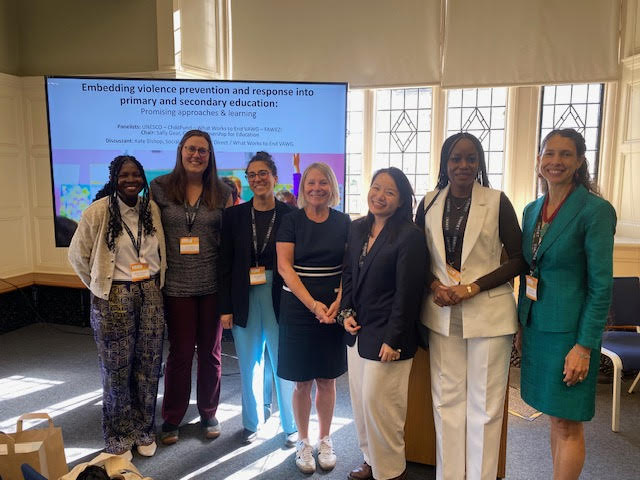
In September 2025, I attended the UKFIET conference on the theme ‘mobilising knowledge, partnerships for sustainable development through education and training’ in Oxford. To attend this conference, UKFIET Trustees and Sightsavers provided me with some financial assistance. My aim for attending the conference was to share findings and lessons from a recently concluded study on school-related gender-based violence (SRGBV) from the perspectives of children with disabilities in Sierra Leone, funded by the Sexual Violence Research Initiative (SVRI). My second objective was to learn from what other researchers and practitioners were doing to understand violence in schools and strategies for tackling it.
Among others, pre-conference preparations included preparing a PowerPoint presentation and co-authoring a blog on how maps are helping to make children with disabilities feel safer on the way to and from school. This blog discuses my personal reflections from the conference and will be done in two parts, learning from other papers and key issues from my own presentation.
Learning from others
Based on the objectives above, I was interested in attending sessions that address the following topics: children with disabilities in school, inclusive education, violence in school, learner safety and efforts by stakeholders to tackle violence in schools. Apart from my own presentation, the opening ceremony and plenaries, I attended eight sessions that I had previously selected from the conference agenda. Out of these, three were on school violence, two on gender, two on classroom practices and one on disability. Despite these diverse categories, I observed that most presentations share the following issues in common, some of which I found significant for my work in Sierra Leone.
- Protection and inclusion of learners – safety and protection for learners was addressed in most papers, exploring what stakeholders were doing to make the learning environment safe. In spite of these efforts, the majority of authors observed that students were frequently afraid of violence in schools. This may be because schools lack adequate safeguards, such as complaint and redress mechanisms. They also linked poor classroom practices, exclusion of marginalized students, absenteeism, and poor academic performance to school violence.
- Partnerships with stakeholders – Education is gradually reaching children in remote areas despite obstacles like poverty, armed conflict, and difficult access. Some presentations revealed that local and international educational institutions are increasingly collaborating with governments to ensure the provision of high-quality education. Stakeholders work together to improve education outcomes through partnerships, which benefit all partners—students, school communities, and state educational institutions. Improved education outcomes in turn contribute to human capital development and economic growth of concerned countries.
- Education-related policies and regulations – Formulated by states and schools to oversee the delivery of education in order to improve learning outcomes in secure settings. Policies dictate how stakeholders in the education sector, including teachers and students, governments, and donors, interact with one another. Education policy is essential for the growth of a country, especially in the areas of human capital, economic and social development.
- Professional development of teachers – It emerged from most papers that teachers are agents of transformation and are central to the safety and academic performance of learners. Professional development of teachers is therefore key in the achievement of educational aspirations for both learners and governments. Therefore, in order to guarantee that high-quality education is provided in a safe and inclusive environment, governments and their partners must make investments in teacher professional development.
- Disability in education – Of the eight sessions I attended, only one dealt with disability, and it was in the category of inclusion and intersectionality. This shows that disability research in education is still lacking. Researchers and policymakers need to invest more in understanding the lived experiences of children with disabilities regarding their perspectives on how they cope with violence in schools in light of the global high number of children with disabilities attending school and the obstacles they face both inside the classroom and on their way there and back.
Sharing my own work
“Safety and wellbeing in education: preventing violence in education” was the topic of my paper. Four additional papers in this category dealt with school-related gender-based violence (Sierra Leone), safeguarding mechanisms in schools (Nigeria and Syria), and the end of corporal punishment in schools (Pakistan). Although the background of these papers, including mine, were different, they had the following five themes in common.
- In study schools, violence, particularly sexual harassment and corporal punishment, was common.
- Fear of stigma and retaliation is probably why SRGBV is underreported.
- Key drivers of SRGBV were identified as teachers’ own childhood experiences of violence and cultural beliefs.
- Mechanisms for filing complaints and safeguards were lacking.
- In order for teachers to transform into agents of safety and inclusion in classrooms rather than violent perpetrators, they require training.
While my paper examined SRGBV from the perspectives of children with disabilities, the others focused on the entire school population, generally analysing data generated from the community, including school authorities.
On September 18, 2025, I presented my paper titled “Safely at school: reducing the risks of school-related gender-based violence for children with disabilities in Sierra Leone.” Focus group discussions, participatory mapping, and photovoice were used to collect data in inclusive schools in the Karene district. Key findings from the study included the following.
- Children with disabilities are more likely to experience violence as a result of incorrect cultural beliefs that perpetuate stigma and discrimination based on disabilities.
- Children with disabilities are more likely to be victims of violence on their way to and from school because of geographic factors like rurality and inadequate infrastructure.
- Physical (bullying and corporal punishment), sexual harassment, psychological, and neglect were the most common forms of violence that children with disabilities encountered in school.
- We observed that girls and boys experienced different forms of violence more than others. Girls with disabilities for instance experienced more sexual harassment compared to boys. Boys with disabilities on the other hand experienced more corporal punishment and discrimination in accessing motorcycles, locally referred to as Okada (popular mode of public transportation in the study area) compared to girls.
- Children with disabilities frequently fear reporting incidents of abuse in order to avoid being stigmatized and subjected to retaliation because of the weak mechanisms for reporting abuse in schools and communities. School communities developed location-specific SRGBV response plans by utilizing the presented findings.
- Although community plans were different, they had the following approaches in common – raising public awareness on disability and violence, strengthening local bylaws and regulations in communities and schools respectively, strengthening abuse reporting mechanisms and improving conditions of roads used by children with disabilities to and from school.
Conclusion
The study sought to comprehend SRGBV from the viewpoints of disabled children. As a result, it increased the number of children with disabilities speaking out against school violence, a problem that affects millions of children worldwide annually. It was fulfilling professionally to present the study’s findings, including local SRGBV response initiatives, at UKFIET 2025. It was encouraging to see so much work being done worldwide to understand school violence and to make schools safer for students. Despite these efforts, I was disappointed by the fact that the experiences of children with disabilities concerning school violence was not given more prominence at the conference. Researchers and policymakers should be encouraged to emphasize the experiences of children with disabilities in schools as much as possible at future UFKEIT conferences.